
Wheels for Dogs: Dispelling the Myths and Embracing Possibility

Updated: Apr 8
Wheels are often considered a last resort—a sign that a dog’s quality of life is inevitably declining. At Wag Rehab, we’re here to challenge that perception. The reality is far more positive, empowering, and full of possibility. Wheels can be appropriate in a range of situations and can be a helpful part of rehab and condition management.

Let’s dispel some of the most common myths about canine wheels and explore how, when used correctly, they can transform a dog’s life.
Understanding Canine Wheels
Myth 1: Dogs on Wheels Have a Poor Quality of Life
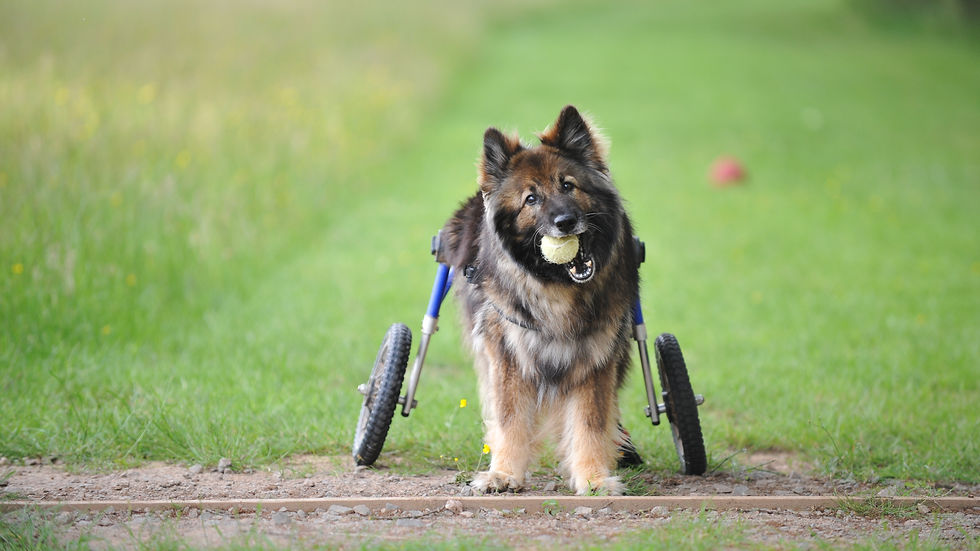
One of the biggest misconceptions is that dogs struggle to adjust to wheels and cannot have a good quality of life. Most dogs quickly adapt to wheels and use them for regular walks, including off-leash.
Dogs are incredibly adaptable. With the right introduction and support, many quickly adjust to using them. This allows freedom to explore, play, and enjoy walks again. Many dogs enjoy running, playing off-lead, and engaging with their environment just as enthusiastically as they did before mobility challenges arose.
Far from limiting them, wheels often restore independence and joy.
Myth 2: Wheels Are Only for Dogs That Can’t Walk
Wheels are not just for dogs with complete paralysis. They can also play a valuable role as a support tool for dogs with degenerative conditions or weakness during rehabilitation. In these cases, wheels can act like stabilisers—helping to improve balance, reduce fatigue, and maintain mobility for longer while facilitating independence in walking.
By providing the right level of support, wheels can optimise quality of life and help dogs stay active and engaged during the progression of degenerative conditions.
Myth 3: Wheels Stop Dogs from Walking
A common concern is that introducing wheels will cause a dog to “give up” trying to walk. This simply isn’t the case.
When used appropriately—and under the guidance of a veterinary physiotherapist—wheels can actually support and optimise gait. In certain cases they can:
Support against gravity whilst limb strength is developing
Provide balance support
Reduce compensatory strain
Allow controlled rehabilitative exercise without overexertion
Wheels are not about passive mobility movement—they’re about supporting better independence in movement.

Myth 4: Wheels Are One-Size-Fits-All
Dogs come in all shapes and sizes, and there is huge variation across conditions—so it makes sense that their needs may vary too. There are a few differences between the best wheels and variation in the support that can be provided. Wheels can support:
Hindlimbs
Front limbs
Or both
The key is getting the right setup for your individual dog, which is why working with an experienced veterinary physiotherapist is so important. Proper assessment ensures the wheels complement your dog’s needs rather than hinder them.
Myth 5: Cheaper Wheels Are Just as Good
It’s understandable to look for a quick, affordable solution—but when it comes to wheels, cheaper options can often become a false economy. Poorly fitted or low-quality wheels can:
Cause discomfort or rubbing
Restrict natural movement
Prevent habituation and seamless transition into use
Investing in the right equipment from the start, with professional guidance, ensures your dog’s comfort, safety, and long-term benefit. A well-selected set of wheels can make an enormous difference to your dog’s mobility and wellbeing.
Myth 6: You Have to Buy Wheels Straight Away
The good news is—you don’t.
There are a number of UK-based charities that offer wheel loan schemes, allowing your dog to trial wheels before committing to a purchase. An experienced veterinary physiotherapist can guide you toward the most appropriate options and help you access these resources. This approach ensures you make an informed, confident decision.
The Importance of Professional Guidance
Introducing wheels isn’t just about strapping them on and heading out the door. A successful transition involves:
Careful assessment of whether wheels are appropriate
Selecting the correct type and fitting properly
A phased habituation process to build confidence
Ongoing adjustments as your dog adapts
Guidance on safe and effective use for the long term
With the right support, wheels become a powerful tool—not just for mobility, but for improving overall quality of life.
Real-Life Transformations
I’ve seen firsthand how wheels can change lives. One of my clients had a lovely Labrador named Max. After a hip injury, Max struggled to walk. His owner was heartbroken, thinking their adventures were over. But with the right wheels, Max was back to exploring the park, tail wagging and spirit high. It was a joy to witness!
In Summary
Wheels can be life-changing for dogs—not as a last resort, but as a proactive, positive step toward maintaining mobility, independence, and happiness. They are:
Well tolerated by most dogs
Useful for more than just paralysis
Supportive of, not detrimental to, walking
Highly individual and best selected with expert input
An investment in your dog’s wellbeing
Most importantly, they work best when guided by a veterinary physiotherapist who can support you every step of the way—from consideration to confident regular use.
Ready to Explore Wheels for Your Dog?
If you’re considering wheels for your dog, we’re here to help.
At Wag Rehab, we are highly experienced in the use of wheels for dogs. We can provide expert assessment, tailored recommendations, and ongoing support to ensure your dog gets the very best outcome.
Help your dog live their best life!
👉 Make an enquiry today: www.wagrehab.co.uk


Comments